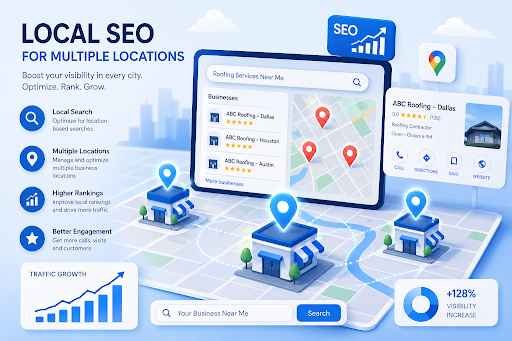
In today’s competitive digital landscape, simply having a website isn’t enough—especially if your business operates in multiple locations. Whether you run a chain of clinics, restaurants, service centers, or retail outlets, your customers are searching for services “near me.” That’s where Local SEO becomes critical.
Local SEO helps your business appear in location-based search results, Google Maps listings, and local packs. But when you have multiple locations, things can get a bit more complex. You need a strategy that ensures each branch gets the visibility it deserves—without creating confusion for search engines or users.
Let’s break down the most effective Local SEO tips to boost visibility for multi-location businesses.
1. Create Dedicated Location Pages
One of the most important steps in multi-location SEO is creating separate landing pages for each location. Avoid listing all branches on a single page—this limits your chances of ranking locally.
Each location page should include:
- Business name, address, and phone number (NAP)
- Location-specific keywords (e.g., “roofing services in Houston”)
- Unique content about that branch
- Embedded map
- Customer reviews or testimonials
For example, instead of one generic page, create pages like:
- /houston-roofing-services
- /dallas-roof-repair
This helps search engines understand that your business serves multiple geographic areas.
2. Optimize Your Google Business Profiles
For multi-location businesses, having multiple Google Business Profiles (formerly Google My Business) is essential. Each location should have its own verified listing.
Make sure to:
- Use consistent NAP details
- Select the correct business category
- Add high-quality images
- Update business hours regularly
- Respond to reviews
Consistency is key here. If your business name or phone number differs across listings, it can hurt your rankings.
3. Maintain NAP Consistency Across the Web
NAP (Name, Address, Phone Number) consistency is a major ranking factor in Local SEO. Your business details should match exactly across all platforms—website, directories, social media, and listings.
Even small differences like:
- “St.” vs “Street”
- Different phone formats
can confuse search engines.
Use business listing sites and citation platforms to ensure uniformity across all locations.
4. Use Location-Based Keywords Strategically
Keyword optimization plays a huge role in ranking locally. Instead of targeting only general keywords, include location modifiers.
Examples:
- “Legal services in Houston”
- “Best roofing company in Dallas”
- “Plumbing services near Austin”
Add these keywords naturally in:
- Page titles
- Meta descriptions
- Headings (H1, H2)
- Content body
- Image alt text
But avoid keyword stuffing. Focus on readability and user intent.
5. Build Local Citations for Each Location
Citations are mentions of your business on external websites like directories, blogs, or listing platforms. They help search engines verify your business’s legitimacy.
For each location:
- Submit to local directories
- Add listings on industry-specific sites
- Use platforms like Yelp, Bing Places, and others
Make sure each listing has accurate NAP details. More high-quality citations = stronger local authority.
6. Collect and Manage Customer Reviews
Reviews are one of the most powerful factors in Local SEO. They not only improve rankings but also influence customer decisions.
Encourage customers from each location to leave reviews on:
- Yelp
Tips:
- Ask for reviews after successful service
- Respond to all reviews (positive and negative)
- Use location-specific responses when possible
For example:
“Thank you for choosing our Houston branch!”
This adds local relevance and builds trust.
7. Optimize for Mobile Users
Most local searches happen on mobile devices. People search for businesses while on the go, so your website must be mobile-friendly.
Ensure:
- Fast loading speed
- Responsive design
- Click-to-call buttons
- Easy navigation
A poor mobile experience can lead to high bounce rates and lost customers.
8. Use Schema Markup for Local SEO
Schema markup (structured data) helps search engines better understand your business information. For multi-location businesses, you can use LocalBusiness schema for each branch.
Include:
- Business name
- Address
- Phone number
- Opening hours
- Geo-coordinates
This can improve your chances of appearing in rich results and local packs.
9. Build Local Backlinks
Backlinks from local websites signal relevance and authority to search engines.
Try to get links from:
- Local news websites
- Community blogs
- Chamber of commerce websites
- Local business partnerships
For example, sponsoring a local event or collaborating with nearby businesses can help you earn valuable backlinks.
10. Create Location-Specific Content
Content marketing is a great way to target local audiences. Instead of generic blogs, create content tailored to each location.
Examples:
- “Top Roofing Problems in Houston Weather”
- “How Dallas Climate Affects Your Roof”
- “Best Legal Tips for Residents in Austin”
This helps you rank for local queries and connect with your audience more effectively.
11. Use Social Media for Local Engagement
Social media platforms can boost your local presence when used correctly.
You can:
- Share location-specific updates
- Promote local events
- Tag locations in posts
- Engage with local audiences
If possible, create separate social pages for major locations.
12. Track Performance for Each Location
Finally, you need to measure your Local SEO efforts.
Use tools like:
- Google Analytics
- Google Search Console
- Google Business Profile Insights
Track metrics such as:
- Website traffic by location
- Keyword rankings
- Calls and direction requests
- Conversion rates
This helps you identify which locations are performing well and where improvements are needed.
Final Thoughts
Managing Local SEO for multiple locations may seem challenging, but with the right strategy, it becomes a powerful growth tool. The key is to treat each location as its own entity while maintaining brand consistency across all platforms.
Focus on creating unique, optimized pages, maintaining accurate business information, and engaging with local audiences. Over time, these efforts will significantly improve your visibility, drive more traffic, and increase conversions across all your locations.
If done right, Local SEO can turn each of your business locations into a strong digital asset—helping you dominate search results city by city.