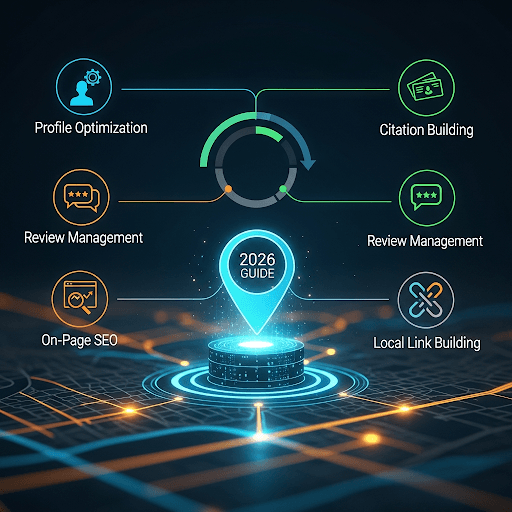
If you are running a brick-and-mortar business in 2026 and you are not showing up in that “Map Pack” at the top of the search results, you are basically invisible. It is a total bummer to watch your competitors snag all the foot traffic just because their digital storefront is shinier than yours. The hard truth is that proximity isn’t enough anymore; you have to prove to Google that you are the best answer for a local search. The solution to this headache is mastering a lean, mean local search strategy that puts your pin on the map and keeps it there.
Get Your Google Business Profile in Tip-Top Shape
If you run into any technical snags while verifying your ownership, you can always check the official Google Business Profile Help Center for a quick fix. The first move in any local SEO play is claiming and optimizing your Google Business Profile (GBP). Think of this as your digital billboard. If your profile is a ghost town with no photos or old hours, Google will ghost you right back. You need to fill out every single box they give you. That means your business name, address, and phone number—often called NAP—must be one hundred percent accurate.
In 2026, Google also looks at “Openness.” If you say you are open, be open. Google now uses phone location data to see if people are actually visiting when you say you’re available. This guide on local seo for beginners, step by step, starts here because without a verified and active profile, the rest of your work won’t mean a lick.
Nail Your Keyword Research For The Neighborhood
You cannot just guess what people are typing into their phones while they are walking down the street. You need to find the specific phrases your neighbors use. In 2026, people are talking to their phones more than typing, so “near me” has evolved into conversational questions.
Focus On User Intent
When you are picking keywords, think about what the person actually wants. Are they just browsing, or are they ready to drop some cash right now? Target the “ready to buy” keywords first. These usually include specific services plus your city name.
Use Long Tail Keywords
These are longer phrases that are less competitive but highly specific. Instead of just “pizza,” try “best gluten-free wood-fired pizza in Brooklyn.” These are gold mines for small businesses trying to beat the big chains and showing up in AI-generated summaries.
Master The Art Of Citations And Consistency
A citation is just a mention of your business on other websites, like Yelp, Yellow Pages, or your local Chamber of Commerce. Google looks at these to see if you are a legit operation. If your address is listed as “Street” on one site and “St.” on another, it can actually confuse the algorithm. You want your NAP data to be identical everywhere it appears on the web.
“Keeping your data straight is key. If you are looking for more ways to grow your digital presence, check out our latest tech tips for business growth on Tech Tribe Mag.”
| Platform Type | Importance | Action Item |
| Major Directories | High | Claim Yelp, Bing Places, and Apple Maps |
| Industry Specific | Medium | Join sites like Houzz, TripAdvisor, or Thumbtack |
| Local Orgs | High | Get listed on your local city government site or local news |
Build A Website That Screams Local
Your website needs to be more than just pretty; it needs to be a local powerhouse. This is where local seo for beginners, step by step,
khgf7r5really starts to pay off. Every page should be optimized for mobile users because most local searches happen on the fly.
Create Local Landing Pages
If you serve multiple cities, do not just list them in the footer. Create a dedicated page for each city. Talk about local landmarks like the town square or the high school football stadium. Mention local events you attended. This tells Google you really are a part of that community and not some corporate bot.
Use Local Business Schema
This is a bit of “under the hood” code that tells Google exactly what your business does. In 2026, Schema is mandatory if you want to show up in Google’s AI Overviews. It helps the AI understand your hours, prices, and specific services without having to guess.
Rack Up Those Five-Star Reviews
Reviews are the lifeblood of local SEO. In 2026, social proof is everything. According to the Local Consumer Review Survey 2026, nearly 97% of people read online reviews before visiting a local shop. Google loves businesses that people actually like, and these stats prove that your customers are looking at your track record before they ever step through your door. You should have a system in place to ask every happy customer for a review. Don’t be shy about it; most people are happy to help if you did a great job.
Reviews are the lifeblood of local SEO. In 2026, social proof is everything. Google doesn’t just look at the number of stars; it reads the text. If a customer mentions “best latte in Seattle” in their review, that helps you rank for that specific phrase.
Respond To Every Single Review
Yes, even the bad ones. If someone leaves a salty comment, respond professionally and try to make it right. It shows potential customers that you actually care. When you respond to positive reviews, use them as a chance to mention a service. “Glad you loved the brake repair!” helps your SEO more than just “Thanks!”
Focus On Review Velocity
Google likes a steady stream of reviews. Getting 50 reviews in one day and then none for six months looks fishy. Aim for a “slow and steady” approach where you get a couple of fresh ones every week to show you are still in business and killing it.
Mobile Optimization And The Need For Speed
If your site is not mobile-friendly in 2026, you might as well pack it up. “Most people looking for local services are doing it on a smartphone while they are out and about. Staying updated on the latest mobile technology trends is crucial for any business owner in 2026.”
Optimize For Visual Search
People are using Google Lens to find businesses by taking photos. Make sure the photos on your site and GBP are high-res and clearly show your storefront and products. Google’s AI can now “see” your signage and recognize your brand in the real world.
Simplify Your Navigation
Keep your menu simple. People on phones don’t want to dig through ten layers of pages. They want to know what you do, where you are, and how to contact you. If you follow this local seo for beginners step-by-step approach, you will focus on the user experience above all else.
Monitor Your Progress And Pivot
SEO isn’t a “set it and forget it” kind of deal. You need to keep an eye on your rankings and your traffic. Use tools like Google Search Console to see which keywords are bringing people to your site and check your “Direction Requests” in your GBP insights.
Track Your Map Rankings
There are specific tools that show you a grid of your rankings across town. You might rank #1 when you are standing in your shop, but #10 when you are three blocks away. This data helps you figure out where you need to beef up your local backlinks or local content.
Audit Your Citations Regularly
Every few months, do a quick search to make sure your information is still correct across the web. In 2026, local databases update fast, so staying on top of this keeps your “trust score” high with Google.
Wrap It All Up For Local Success
Getting your business to the top of Google Maps isn’t some secret magic trick reserved for big agencies with huge budgets. It is really about being consistent, being helpful, and being undeniably local. By cleaning up your Google Business Profile, keeping your data tight across the web, and actually engaging with your community, you build a digital footprint that Google can’t ignore. It takes a bit of elbow grease and some patience, but once those calls start rolling in from the Map Pack, you’ll see it was worth every second of the hustle. Don’t let your shop get buried under the noise; take the wheel and drive your local presence to the top of the pile.