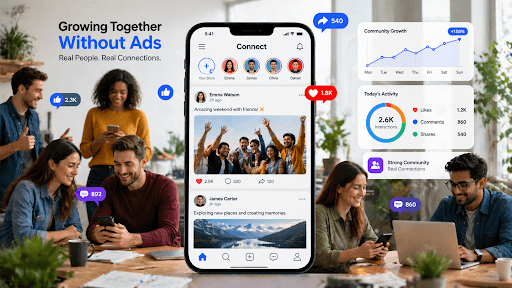
Social media apps feel inseparable from advertising today. Every scroll comes with sponsored posts, influencer collaborations, and targeted promotions. But this wasn’t always the case. In the early stages, many platforms operated without ads and still managed to survive—and even thrive.
So how did social media apps sustain themselves before ads became the primary revenue model? Let’s break it down.
The Early Days of Social Media
When social media platforms first launched, their main goal wasn’t profit—it was growth. Founders focused on building a strong user base, improving engagement, and creating a product people loved.
Focus on User Acquisition Over Revenue
In the beginning, platforms prioritized:
- Gaining users quickly
- Creating a seamless user experience
- Building a strong network effect
The idea was simple: if millions of people use your app daily, monetization opportunities will come later.
Venture Capital Funding: The Main Lifeline
How Funding Kept Platforms Alive
Before ads, most social media apps relied heavily on venture capital (VC) funding. Investors poured money into promising startups with the expectation that they would become profitable in the future.
Why Investors Took the Risk
Investors believed in:
- Rapid user growth potential
- Future monetization strategies
- Market dominance possibilities
This allowed companies to operate at a loss for years while scaling their platforms.
Freemium Models and Premium Features
Not all platforms were completely free in terms of revenue generation. Some adopted a freemium model.
What is a Freemium Model?
Freemium means:
- Basic features are free
- Advanced features require payment
Examples of Premium Offerings
Platforms earned money through:
- Subscription-based features
- Enhanced profile visibility
- Exclusive tools for professionals
This model worked especially well for niche platforms targeting business users or creators.
Data and Long-Term Value Strategy
Building Data Before Monetizing It
Even before ads, social media apps collected massive amounts of user data. While they didn’t always monetize it immediately, this data had future value.
Why Data Was Important
- Helped improve algorithms
- Enhanced user experience
- Enabled future targeted advertising
The more data a platform collected, the more valuable it became over time.
Partnerships and Collaborations
Strategic Alliances
Some platforms partnered with brands, media companies, or other tech firms even before introducing ads formally.
Types of Partnerships
- Content collaborations
- Sponsored integrations (non-intrusive)
- API access for developers
These partnerships generated early revenue without disrupting user experience.
Paid Acquisitions and Exit Strategies
Selling the Platform
Some social media apps didn’t aim to generate long-term revenue independently. Instead, they focused on growth and then got acquired by bigger companies.
Why Acquisitions Happened
- Larger companies wanted user data and technology
- Startups gained financial returns
- Integration into bigger ecosystems
This was a common “exit strategy” for many early platforms.
Community-Driven Growth
Users as the Core Asset
Before ads, the biggest asset wasn’t money—it was the community.
How Communities Helped
- Organic growth through word-of-mouth
- User-generated content reduced costs
- Strong engagement increased platform value
Platforms essentially became self-sustaining ecosystems powered by users.
Cost Control and Lean Operations
Keeping Expenses Low
Early-stage social media startups often operated with limited resources.
Strategies Used
- Small teams
- Minimal infrastructure
- Cloud-based services
This helped them extend their runway while focusing on growth.
Transition to Advertising
Eventually, most platforms introduced ads—but only after reaching a critical mass of users.
Why Ads Came Later
- Large audience ensured advertiser interest
- Data allowed precise targeting
- Revenue potential became massive
By the time ads were introduced, users were already deeply engaged, making monetization smoother.
Key Takeaways
How Social Media Apps Survived Before Ads
- Heavy reliance on venture capital funding
- Focus on user growth instead of early profits
- Use of freemium models and premium features
- Strategic partnerships and collaborations
- Data collection for long-term value
- Acquisition as an exit strategy
- Strong community-driven ecosystems
- Lean operations to reduce costs
Conclusion
Social media apps didn’t start as profit machines—they started as growth machines. Their survival before ads was fueled by investor confidence, smart strategies, and a relentless focus on user engagement.
Ads came later, but by then, the foundation was already strong.
Understanding this journey not only explains how these platforms evolved but also offers valuable lessons for anyone building a digital product today: focus on value first, and monetization will follow.