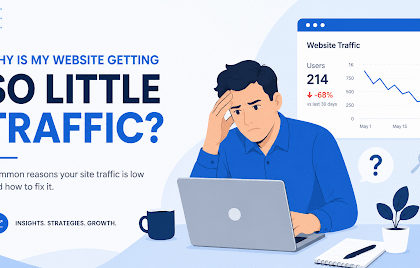
Six months in, and you’re still checking your rankings every morning hoping for a miracle. Nothing’s moved. Your traffic looks the same as it did back in month one. And now you’re wondering if this whole SEO thing was a waste of time and money. Here’s the good news. In most cases, why is my SEO not working after 6 months comes down to one of a handful of fixable issues, not some mysterious Google curse. Fix the right one, and things start moving.
Let’s break down exactly what’s going on.
The 6 Month SEO Myth, Explained
Somewhere along the way, “give it 6 months” turned into a hard rule. It’s not. It’s just a rough average based on how long it usually takes Google to crawl, index, and start trusting content, assuming everything else is done right.
Your actual timeline depends on stuff like:
- How competitive your industry is
- How old and trusted your website already is
- How much content and how many links your competitors have stacked up
- Whether your site had technical baggage before you even started
- Whether the work has actually been consistent for those 6 months
A local HVAC company going after “AC repair near me” could see movement in 8 to 10 weeks. A software company going after “project management tool” is up against giants like Asana and Monday.com. Six months there might just be the warm up lap.
The Real Reasons Your SEO Isn’t Working
If you’re genuinely asking why is my SEO not working after 6 months, chances are it’s one (or a few) of these eight things.
Wrong Keyword Targets
This one trips up almost everyone. You go after big, broad keywords because they sound good, but they’re way too competitive for a newer or smaller site. Meanwhile, specific, long tail phrases that actually match what your customers type in get ignored.
Fix it by getting specific. “Marketing agency” is brutal to rank for. “Marketing agency for dental clinics in Texas” is a whole different ballgame. Our guide to effective keyword research techniques breaks down exactly how to find these lower competition phrases.
Think about it from a competition standpoint. Broad, one or two word keywords usually have huge, established companies sitting on page one already. A smaller or newer site trying to outrank them in 6 months is fighting an uphill battle from day one. Long tail phrases have way less competition, and they tend to convert better too, since the person typing them in already knows pretty specifically what they’re looking for.
Technical Roadblocks Nobody Fixed
Great content on a broken site is like a great steak served on a dirty plate. Google just won’t serve it up.
Common culprits include slow loading pages, broken internal links, missing meta tags, and pages accidentally blocked from being crawled. These are boring to fix, but they matter a ton.
Here’s the thing about technical issues. They’re sneaky because everything can look fine from the outside. Your site loads, the pages look normal, and nothing seems broken. But under the hood, Google might be struggling to crawl certain pages, or running into duplicate content it can’t tell apart. A quick free site audit tool can usually flag most of this stuff within minutes.
Content That Misses Search Intent
Ranking isn’t just about stuffing a keyword on the page. It’s about giving people exactly what they were hoping to find. If someone searches for a quick answer and your page is a 3,000 word novel, Google’s going to keep showing the shorter, more direct competitor instead.
A simple way to check this yourself is to just search your target keyword and look at what’s already ranking. Are those results blog posts, product pages, or quick how to guides? Whatever format keeps showing up is usually a strong hint at what Google thinks people actually want when they search that phrase.
A Thin Backlink Profile
Backlinks are basically votes of confidence from other websites. If your competitors have dozens of solid ones and you’ve got a handful, that gap alone can hold you back, even with killer content.
Not all links are equal either. A mention on a random low quality directory doesn’t carry nearly the same weight as a link from a respected, relevant site in your industry. Quality beats quantity here every single time.
Inconsistent Publishing
Google tends to favor sites that show up consistently. One big content push in month one, followed by silence, sends the wrong signal. Slow and steady really does win here.
It doesn’t have to be daily either. Even one solid, well researched piece a week beats five rushed, thin ones. What matters most is that there’s a rhythm Google can pick up on over time.
Missing Local SEO Signals
If you’re a local business and you’re not showing up in the map pack, this is usually why.
An incomplete Google Business Profile, mismatched business info across the web, and a lack of reviews all chip away at your local visibility.
Double check that your business name, address, and phone number look exactly the same everywhere online, from your website to Yelp to your Facebook page. Even small mismatches, like “St.” in one place and “Street” in another, can confuse things more than people expect.
Slow Site Speed And Bad Mobile Experience
Most people are searching on their phones. If your site drags or looks broken on mobile, it’s working against you no matter how good the writing is.
A page that takes more than a couple seconds to load can lose a big chunk of visitors before they even see your content. And since Core Web Vitals are a known ranking factor, that slow load time isn’t just annoying, it’s actively working against your rankings too.
Tracking The Wrong Numbers
Sometimes SEO actually is working, it just doesn’t look like it because you’re only checking one metric. Jumping from position 18 to position 7 is real, solid progress, even if you’re not on page one yet.
Instead of only checking rankings, keep an eye on impressions and clicks in Search Console too. Rising impressions usually show up before rankings do, and they’re a good early sign that things are heading in the right direction.
How To Check What’s Actually Going Wrong
Check if your pages are actually indexed in Google Search Console first. Second, run a basic technical audit for speed and crawl errors. Third, look at whether your target keywords are realistic for your site’s current authority. Fourth, compare your top pages against what’s already ranking to see if your content actually matches what people want. Fifth, take a look at your backlinks compared to your competitors. And finally, look at your trend lines over time, not just where you sit today.
What A Normal SEO Timeline Really Looks Like
| Competition Level | First Signs of Movement | Solid Results |
| Low (local, niche terms) | 4 to 8 weeks | 3 to 4 months |
| Medium (regional, moderate competition) | 3 to 4 months | 6 to 9 months |
| High (national, big competitors) | 6 to 9 months | 12 months or more |
If you’re in a crowded, competitive space and expecting page one results in half a year, that mismatch in expectations might be the real issue, not your strategy.
When You Should Actually Worry
A little bit of slow, steady progress after 6 months is totally normal, especially in tougher industries. What’s not normal is zero movement anywhere. No new impressions, no shift in average position, nothing.
Other red flags worth paying attention to include no new content being published at all, basic technical fixes still sitting untouched after being pointed out, and radio silence with no reporting or updates on what’s actually being done.
If several of those sound familiar, you’re probably not dealing with a timeline problem. You’re dealing with an execution problem.
Common Questions People Ask
Is 6 months too soon to expect results?
For tough, competitive keywords, yes, that’s usually still early days. For smaller, local searches, you should already be seeing solid traffic by then.
What’s the quickest way to check if it’s actually working?
Look at your impressions and average position trends in Google Search Console over time. Upward movement counts as progress, even before you hit page one.
Should I be worried if my rankings dropped for a bit?
Small dips happen all the time and usually bounce back. It’s only worth worrying if the drop is steep and doesn’t recover after a few weeks.
Understanding why my SEO is not working after 6 months really comes down to figuring out which of these pieces is missing or broken, then fixing that one thing instead of just waiting around and hoping.
Wrapping It Up
SEO isn’t magic, and it isn’t instant either. It’s closer to planting a garden than flipping a switch. Some things sprout fast, others take a full season, and every now and then you’ve got to pull a weed or two before anything grows the way it should. If your numbers haven’t budged in 6 months, don’t panic and don’t assume the whole thing is broken. Walk through the checklist, figure out which piece is actually stuck, and fix that piece. More often than not, that’s all it takes to get things growing again.
Tags (WordPress Post Tags):
SEO, SEO Tips, Search Engine Optimization, SEO Results, SEO Timeline, Organic Traffic, Google Rankings, SEO for Small Business, Technical SEO, Local SEO
Featured Image Title:
Why Your SEO Isn’t Working After 6 Months
Featured Image Alt Text (SEO — important for image search & accessibility):
Frustrated business owner checking flat SEO rankings and traffic graph after 6 months
Featured Image Caption:
Six months in and still no movement? Here’s how to figure out what’s actually holding your SEO back.
Featured Image Description:
An illustration representing a business owner reviewing stagnant website traffic and search ranking data, reflecting the common frustration of SEO efforts not showing results after six months.