Digital healthcare has experienced massive growth in recent years, and telemedicine apps have become a core part of modern healthcare delivery. These platforms enable patients to consult doctors remotely, manage appointments, access prescriptions, and receive medical guidance without visiting a physical clinic. However, developing a telemedicine app is not the same as building a regular mobile application. It requires a strong focus on security, compliance, usability, and performance.
Following Telemedicine app development best practices helps healthcare providers, startups, and software teams build applications that are safe, scalable, and trusted by users. This guide explores the most important principles you should consider when creating a telemedicine solution.
Understanding the Importance of Telemedicine App Development
Telemedicine apps bridge the gap between patients and healthcare professionals, especially in remote or underserved areas. They reduce waiting times, lower operational costs, and improve access to medical care. However, because these apps handle sensitive health information, even small development mistakes can lead to legal issues, data breaches, or poor user adoption.
That is why a structured and compliance-focused development approach is essential.
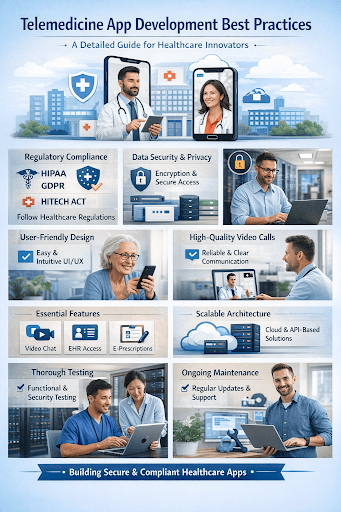
1. Regulatory Compliance Should Be a Top Priority
Healthcare is one of the most regulated industries in the world. Telemedicine apps must comply with regional and international laws that protect patient data and privacy.
Common Regulations Include:
- HIPAA (United States)
- GDPR (European Union)
- HITECH Act
- Local telehealth regulations depending on the country
Ignoring these rules can result in heavy penalties and reputational damage.
Best Practice:
Work closely with legal and compliance experts during the planning phase. Build compliance features directly into the app architecture rather than adding them later.
2. Strong Data Security and Privacy Protection
Patients trust telemedicine apps with their personal details, medical history, and consultation data. Security failures can permanently damage that trust.
Key Security Measures:
- End-to-end encryption for chats and video calls
- Secure authentication with multi-factor login
- Encrypted databases and secure cloud hosting
- Regular security audits and penetration testing
Implementing Telemedicine app development best practices ensures patient data remains protected throughout the app lifecycle.
3. User-Friendly Design for All Age Groups
Telemedicine apps are used by patients, doctors, nurses, and administrative staff. Many users may not be tech-savvy, especially elderly patients.
UI/UX Design Principles:
- Simple onboarding and registration
- Clear appointment booking process
- Large, readable fonts
- Minimal steps to start a consultation
A well-designed interface increases engagement, reduces errors, and improves patient satisfaction.
4. High-Quality Video and Audio Communication
Video consultation is the heart of any telemedicine app. Poor connectivity or lag can disrupt diagnosis and frustrate users.
Performance Optimization Tips:
- Use reliable real-time communication frameworks
- Optimize video quality for low-bandwidth networks
- Offer chat or voice calls as fallback options
Testing across different devices and network conditions is essential before launch.
5. Essential Features Every Telemedicine App Should Have
A successful telemedicine app must meet the functional needs of both patients and healthcare providers.
Core Features Include:
- Video and audio consultations
- Appointment scheduling and reminders
- Electronic prescriptions
- Electronic Health Records (EHR) access
- Secure in-app messaging
- Online payment integration
These features collectively support smooth and efficient healthcare delivery and reflect proven Telemedicine app development best practices.
6. Choosing the Right Technology Stack
The technology stack affects performance, scalability, and long-term maintenance.
Popular Technology Choices:
- Frontend: Flutter, React Native
- Backend: Node.js, Python, Java
- Database: MongoDB, PostgreSQL
- Cloud Services: AWS, Azure, Google Cloud
Choose technologies that support compliance, scalability, and easy integration with third-party healthcare systems.
7. Scalability and Future Growth Planning
Telemedicine platforms often experience rapid user growth, especially after successful adoption. Your app must be able to scale without downtime.
Scalability Strategies:
- Cloud-based infrastructure
- Modular and microservices architecture
- API-first development approach
Planning for growth early reduces future development costs and technical issues.
8. Comprehensive Testing Before Deployment
Testing is critical in healthcare app development because bugs can affect patient care.
Types of Testing Required:
- Functional testing
- Security testing
- Performance testing
- Compliance testing
Real-world testing with doctors and patients helps identify usability issues before public release.
9. Continuous Maintenance and Updates
Launching the app is not the end of the development process. Telemedicine apps require regular updates to remain secure and compliant.
Ongoing Maintenance Includes:
- Security patches
- Feature enhancements
- Performance monitoring
- User feedback analysis
Long-term maintenance ensures consistent app performance and user trust.
Conclusion
Developing a telemedicine app requires a careful balance of technology, healthcare expertise, and legal compliance. From data security and user experience to scalability and testing, every step plays a vital role in success. By following Telemedicine app development best practices, businesses can build reliable digital healthcare platforms that improve patient outcomes and support long-term growth.
Frequently Asked Questions (FAQs)
1. What are telemedicine app development best practices?
They include regulatory compliance, strong data security, user-friendly design, reliable video communication, scalable architecture, and continuous maintenance.
2. How long does it take to develop a telemedicine app?
On average, development takes 3 to 6 months, depending on features, compliance requirements, and platform complexity.
3. Is HIPAA compliance mandatory for telemedicine apps?
Yes, if the app operates in or serves users in the United States, HIPAA compliance is mandatory to protect patient health information.
4. What is the cost of developing a telemedicine app?
Costs vary based on features, technology stack, and security requirements. Basic apps are more affordable, while advanced platforms with EHR integration cost more.
5. Can telemedicine apps integrate with existing hospital systems?
Yes, modern telemedicine apps can integrate with hospital management systems, EHR platforms, and third-party APIs.
For More Info Visit:- techtribemag.com