Most people use tools and technology every single day, but struggle to clearly explain what they actually mean or how they are different. That confusion makes it harder to learn new skills, choose the right solutions, or even talk confidently about work and innovation. The fix is simple. Break the idea down into plain language and real-life examples, then build it back up step by step.
What Is Tools And Technology?
At its core, tools and technology help people get things done faster, easier, and better.
Tools are basic items or systems that help you complete a task. Technology is the application of tools, knowledge, and processes to solve problems at a larger scale. When people ask what is tools and technology, they are really asking how humans turn ideas into practical results.
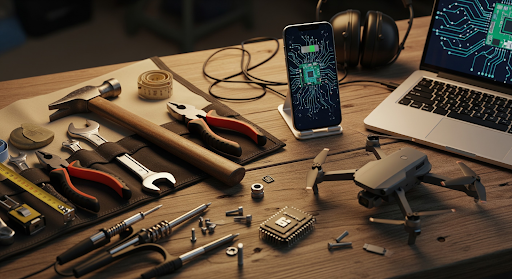
A hammer is a tool. A power drill is technology. A smartphone combines hundreds of tools into one piece of modern technology.
Understanding Tools In Simple Terms
Tools have been around since the earliest days of human history. They are designed to assist physical or mental effort.
Common characteristics of tools include:
- They perform a specific function
- They usually require direct human control
- They can be simple or complex
- They improve efficiency and accuracy
Examples of everyday tools in the US include:
- Kitchen knives
- Screwdrivers
- Measuring cups
- Software calculators
- Spreadsheets for budgeting
Tools do not need electricity or the internet to count as tools. If it helps you do a job better, it qualifies.
Understanding Technology In Everyday Life
Technology builds on tools by combining them with systems, automation, and data. It is how tools evolve when knowledge and innovation are added.
Technology often:
- Solves complex problems
- Reduces manual effort
- Connects people and systems
- Scales results across industries
Examples of technology commonly used across the US:
- GPS navigation apps
- Online banking systems
- Smart home devices
- Telemedicine platforms
- Cloud storage services
When someone asks what is tools and technology, technology is the part that makes tools smarter and more powerful.
Key Differences Between Tools And Technology
While tools and technology are closely connected, they are not the same thing.
| Aspect | Tools | Technology |
| Complexity | Usually simple | Often complex |
| Power Source | Manual or basic | Electrical or digital |
| Scale | Individual use | Large scale systems |
| Learning Curve | Low | Moderate to high |
A wrench tightens a bolt. A robotic assembly line tightens thousands of bolts per hour. Same purpose, different level.
How Tools And Technology Are Used In Daily American Life
From work to home life, tools and technology are everywhere in the US.
In Education
Students and teachers rely on:
- Laptops and tablets
- Learning management systems
- Digital whiteboards
- Online research tools
These technologies make learning flexible and accessible across states and school districts.
In Healthcare
Healthcare systems use:
- Diagnostic machines
- Electronic health records
- Remote patient monitoring tools
- AI assisted imaging
These tools help doctors make faster and more accurate decisions.
In Business And Workplaces
American workplaces depend on:
- Project management software
- Communication platforms
- Data analysis tools
- Automation systems
This allows teams to work smarter instead of burning out on repetitive tasks.
In Everyday Home Life
At home, people use:
- Smart thermostats
- Voice assistants
- Streaming platforms
- Online grocery services
These technologies save time and reduce daily stress.
Why Understanding Tools And Technology Matters Today
Knowing how tools and technology work helps people:
- Adapt to job market changes
- Make informed buying decisions
- Learn new skills faster
- Avoid falling behind in a digital world
When you understand what is tools and technology, you stop feeling overwhelmed by new systems and start using them with confidence.
The Future Of Tools And Technology
Tools will continue to become more specialized. Technology will continue to become more integrated into daily life.
Future trends include:
- Artificial intelligence driven tools
- Greater automation in routine tasks
- Smarter personal devices
- Increased focus on accessibility and usability
The goal stays the same. Make human life easier, safer, and more efficient.
Conclusion
Tools and technology are not abstract concepts meant only for engineers or tech experts. They are practical solutions built to help people solve real problems. Once you understand how tools form the foundation and technology builds on them, everything clicks into place. Instead of feeling lost when new systems appear, you can spot their purpose, learn them faster, and use them to your advantage. That understanding turns confusion into confidence and effort into results.