In today’s digital-first world, most customers turn to Google before visiting a nearby store, booking a service, or choosing a local provider. Searches like “best dentist near me”, “plumber in USA”, or “café near my location” happen millions of times every day. If your business does not appear in these local search results, you are losing potential customers to competitors who do.
This is where Local SEO comes in.
Local SEO helps small businesses increase their visibility in local search results, attract nearby customers, and drive more foot traffic, phone calls, and inquiries. Whether you own a salon, law firm, medical clinic, restaurant, or service-based business, understanding Local SEO is essential for long-term growth.
This beginner-friendly guide will explain what Local SEO is, how it works, why it matters, and how you can start using it effectively.
What Is Local SEO?
Local SEO Local Search Engine Optimization is the process of optimizing your online presence so your business appears in location-based searches on Google and other search engines.
When people search for services “near me” or include a city, area, or neighborhood in their query, Google shows local results. These results often appear in:
- Google Maps
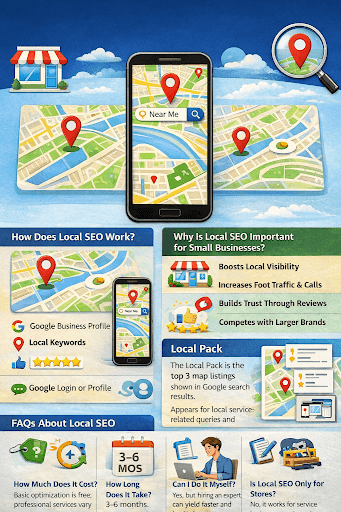
- The “Local Pack” (top 3 map listings)
- Organic search results for location-based keywords
For example:
- “Bakery near me”
- “Digital marketing agency in Mumbai”
- “Best dentist in Birmingham”
Local SEO ensures that your business is visible to people who are actively searching for what you offer in your area.
How Is Local SEO Different from Traditional SEO?
While traditional SEO focuses on ranking websites nationally or globally, Local SEO targets a specific geographic area.
| Traditional SEO | Local SEO |
| Targets broad or national keywords | Targets city, area, or “near me” searches |
| Focuses mainly on website content and backlinks | Includes Google Business Profile, maps, reviews, and citations |
| Competes with global or national brands | Competes with nearby businesses |
If you serve a physical location or a defined service area, Local SEO is far more valuable than general SEO.
Why Is Local SEO Important for Small Businesses?
Local SEO is one of the most cost-effective marketing strategies for small businesses because it targets customers who are already looking for your services.
1. Increases Local Visibility
When your business appears in Google Maps and local search results, more nearby customers discover you.
2. Drives High-Intent Traffic
People searching locally usually want immediate solutions. They are more likely to call, visit, or make a purchase.
3. Builds Trust and Credibility
Optimized profiles with reviews, photos, and accurate information make your business look professional and trustworthy.
4. Competes with Larger Brands
Local SEO levels the playing field. Even small businesses can outrank big companies in local results if optimized properly.
5. Improves Mobile Search Performance
Most local searches happen on mobile devices. Local SEO ensures your business appears when people search on the go.
How Does Local SEO Work?
Google uses several factors to determine which businesses appear in local search results. The main elements include:
1. Google Business Profile (GBP)
Your Google Business Profile is the foundation of Local SEO. It displays your:
- Business name
- Address
- Phone number
- Business hours
- Website link
- Reviews and photos
An optimized profile increases your chances of appearing in Google Maps and the Local Pack.
2. Relevance
Google checks how closely your business matches the user’s search query. Proper category selection, keywords in descriptions, and accurate services help improve relevance.
3. Distance
The search engine considers how close your business is to the searcher’s location.
4. Prominence
Prominence refers to how well-known and trusted your business is online. Reviews, backlinks, citations, and online mentions all influence this factor.
Key Components of Local SEO
1. Google Business Profile Optimization
Claiming and optimizing your profile is the most important step. Make sure:
- Business details are accurate
- Categories match your services
- High-quality photos are added
- Regular updates and posts are published
2. Local Keywords
Use location-based keywords in your website content:
- “Electrician in Pune”
- “Best café in South Delhi”
- “Affordable web design in Manchester”
Include them in:
- Page titles
- Headings
- Meta descriptions
- Service pages
3. NAP Consistency
NAP stands for Name, Address, Phone number. Ensure the same information appears across:
- Website
- Google Business Profile
- Online directories
- Social media
Inconsistent details confuse search engines and reduce rankings.
4. Online Reviews
Customer reviews are one of the strongest local ranking factors. Encourage happy customers to leave reviews on Google and respond to them professionally.
5. Local Citations
Citations are mentions of your business on directories like:
- Yelp
- Justdia
- Yellow Pages
- Business listing websites
These improve trust and visibility.
6. Website Optimization
Your website should:
- Load fast
- Be mobile-friendly
- Have clear contact details
- Include location pages or service area pages
Who Needs Local SEO?
Local SEO benefits any business that serves customers in a specific area, including:
- Restaurants and cafés
- Doctors, clinics, and hospitals
- Lawyers and legal firms
- Salons and spas
- Real estate agents
- Home services (plumbers, electricians, cleaners)
- Retail stores
- Fitness centers and gyms
If customers visit your location or you serve a specific city or region, Local SEO is essential.
How to Start Local SEO for Your Small Business
Step 1: Create and Verify Your Google Business Profile
Visit Google Business Profile, add your business, and complete the verification process.
Step 2: Optimize Your Website for Local Keywords
Add city and service-based keywords naturally in your content.
Step 3: Ensure NAP Consistency
Check all directories and update incorrect business details.
Step 4: Collect Customer Reviews
Ask satisfied customers for honest reviews and reply to them regularly.
Step 5: Build Local Citations and Links
Submit your business to trusted directories and collaborate with local blogs or websites.
Step 6: Track Performance
Use Google Analytics and Google Search Console to monitor traffic, keywords, and user behavior.
Common Local SEO Mistakes to Avoid
- Using incorrect or inconsistent business information
- Ignoring Google reviews
- Not optimizing for mobile devices
- Keyword stuffing with city names
- Choosing the wrong business category
Avoiding these mistakes can significantly improve your results.
How Long Does Local SEO Take to Work?
Local SEO is not instant, but results are usually faster than traditional SEO. Most businesses start seeing improvements in:
- 1–3 months: Profile visibility and map impressions
- 3–6 months: Increased calls, visits, and inquiries
- 6+ months: Stable rankings and consistent traffic
Consistency and regular optimization are key.
Benefits of Local SEO for Small Businesses
- More website visits from nearby users
- Increased phone calls and store visits
- Better online reputation through reviews
- Higher conversion rates than generic traffic
- Stronger presence in your local market
Conclusion
Local SEO is no longer optional for small businesses—it is essential. With more customers relying on local searches to find products and services, appearing in Google Maps and local results can make a direct impact on your revenue.
By optimizing your Google Business Profile, using local keywords, maintaining accurate business information, collecting reviews, and building citations, you can significantly improve your visibility and attract more customers in your area.
Whether you run a single shop or serve multiple locations, investing in Local SEO will help you stay competitive, grow your brand, and connect with customers who are actively searching for what you offer.
Frequently Asked Questions (FAQ)
1. What is Local SEO in simple words?
Local SEO helps your business appear in search results when people look for services or products near their location.
2. Is Local SEO free?
Creating a Google Business Profile is free, but professional optimization, tools, and marketing services may involve costs.
3. Can I do Local SEO myself?
Yes. You can start with basic steps like optimizing your profile, adding local keywords, and collecting reviews. However, professional services can deliver faster and better results.
4. How important are reviews for Local SEO?
Reviews are extremely important. They improve rankings, increase trust, and influence customer decisions.
5. What is the Google Local Pack?
The Local Pack is the top three business listings shown with a map in Google search results for local queries.
6. How long does it take to rank locally?
Most businesses see noticeable improvements within 3 to 6 months, depending on competition and optimization quality.
7. Does Local SEO work for online-only businesses?
Local SEO is most effective for businesses with physical locations or service areas. Purely online businesses benefit more from traditional SEO.
8. Is Local SEO worth it for small businesses?
Yes. It is one of the most cost-effective ways to attract high-intent customers in your local area.
For More Info Visit:- techtribemag.com